

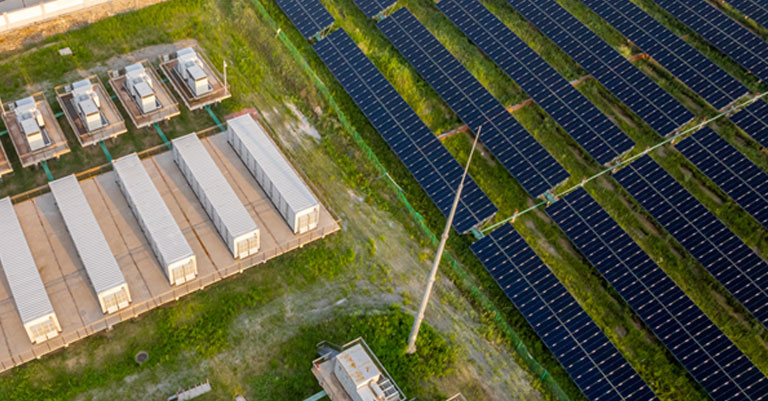
Safety as a Core Requirement in Energy Storage Projects
Battery Energy Storage Systems (BESS) are increasingly used to support grid stability, renewable energy integration, and peak demand management. As system sizes and energy densities increase, safety becomes a key engineering requirement rather than a secondary consideration. In energy storage projects, safety must be addressed from the design stage and carried out through engineering, construction, and operation.
Fire safety, electrical isolation, and emergency response planning directly affect system reliability, asset protection, and personnel safety. Decisions made during early project phases have a long-term impact on how risks are controlled during operation.
Main Safety Risks in Battery Energy Storage Systems
Battery energy storage systems, especially those based on lithium-ion technology, present specific safety risks. One of the most critical risks is thermal runaway, where a battery cell overheats and triggers a chain reaction in nearby cells or modules.
Electrical faults such as short circuits, overcharging, or insulation failures can also lead to overheating and fire. In addition, battery failures may cause the release of flammable or toxic gases, which can increase risk in enclosed containers if not properly managed. Mechanical damage during transport, installation, or maintenance is another risk factor that can affect battery integrity and system safety.
Fire Safety Protocols in Energy Storage Projects
Fire safety protocols in energy storage projects aim to prevent fire events, detect abnormal conditions early, and limit the impact of incidents. These protocols include active and passive protection measures designed according to battery technology, system layout, and site conditions.
Fire safety strategies typically combine early detection systems, fire suppression technologies, and fire-resistant structural elements. The effectiveness of these measures depends on proper system design and correct integration during engineering and construction.
Fire Detection and Suppression Systems:
Fire suppression systems are selected based on battery chemistry, enclosure design, and regulatory requirements. Common technologies include clean agent systems, aerosol-based solutions, and water mist applications. Each solution has specific limitations and performance characteristics, and system effectiveness depends on correct engineering design and integration.
Electrical Isolation and Protection Measures
Electrical isolation is a key safety function in battery energy storage systems. Battery Management Systems continuously monitor voltage, temperature, and current values to detect abnormal operating conditions. When predefined limits are exceeded, affected components can be automatically disconnected to prevent further escalation.
At system level, coordinated AC and DC isolation allows safe separation of the energy storage system from the grid during fault or emergency situations. Proper isolation design reduces the risk of fault propagation and supports safe access for maintenance personnel and emergency responders.
Emergency Response Planning and System Design
Emergency response planning is a key part of energy storage system design. Fire, gas release, and electrical failure scenarios must be considered during engineering and addressed through appropriate design measures.
Energy storage facilities should include clear emergency access, reliable alarm systems, remote monitoring, and well-defined shutdown procedures supported by site-specific emergency response plans.
Safety Considerations Across the Project Lifecycle
Energy storage projects require safety to be systematically integrated into all project phases, including design, installation, commissioning, and operation. During the design phase, safety is embedded through layout planning, equipment selection, and definition of protection and isolation concepts that address identified risks from the outset.
In the installation, commissioning, and operation phases, safety integration is achieved through correct implementation of designed systems, functional testing, continuous monitoring, and defined operational procedures. Regular inspections, preventive maintenance, and trained personnel ensure that safety measures remain effective and consistently applied throughout the system’s operational life.
International Standards, Regulatory Frameworks, and INTEC’s HSQE Approach
Energy storage projects are governed by project-specific international standards and local regulatory requirements covering system safety, electrical installations, fire protection, environmental compliance, and permitting processes. These requirements are defined by relevant authorities, grid operators, and local regulations and must be addressed during the design, approval, and implementation phases of each project.
INTEC Energy Solutions supports compliance with these regulatory and safety requirements through its Health, Safety, Quality, and Environmental (HSQE) framework. INTEC operates under an Integrated Management System aligned with ISO 9001, ISO 14001, and ISO 45001, which establishes structured processes for quality management, environmental protection, and occupational health and safety. With these certifications consistently maintained across its global operations, including regions such as Australia and New Zealand, ensuring a unified approach to quality, safety, and environmental performance. This framework enables systematic risk assessment, consistent safety practices, and controlled project execution across different markets, while technical and regulatory requirements are addressed on a project-specific basis in energy storage projects.
Building Safe and Reliable Energy Storage Systems
The long-term success of energy storage projects relies on safe system design, informed engineering decisions, and a strong safety culture embedded throughout the project lifecycle. Integrating safety from the earliest design stages reduces technical risks and ensures reliable performance during construction, commissioning, and operation.
INTEC Energy Solutions applies this approach through safety-driven engineering practices and a structured HSQE framework integrated into its project execution model. By combining technical expertise with proactive risk management and a firm commitment to health and safety, INTEC delivers energy storage projects that achieve long-term reliability, operational resilience, and high safety standards across diverse project environments.